BLOG
Preventive vs Predictive Maintenance: What’s the Difference?
- 27 Mar 2026
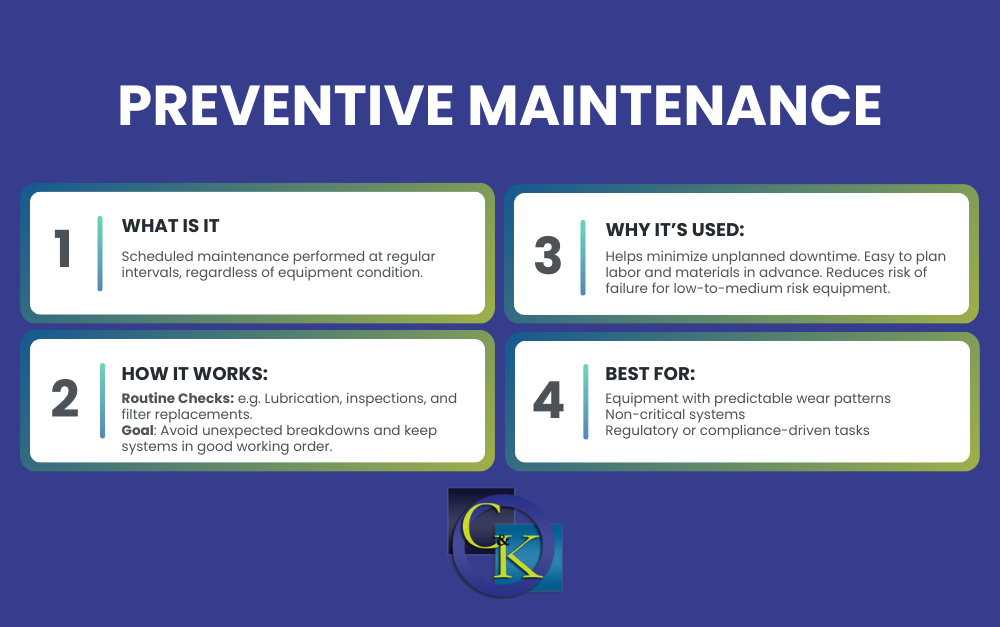
Preventive maintenance means performing scheduled maintenance tasks at regular intervals, whether that’s every 90 days, every 1,000 operating hours, or after a set number of cycles. The equipment might be running fine, but you service it anyway because the schedule says it’s time.
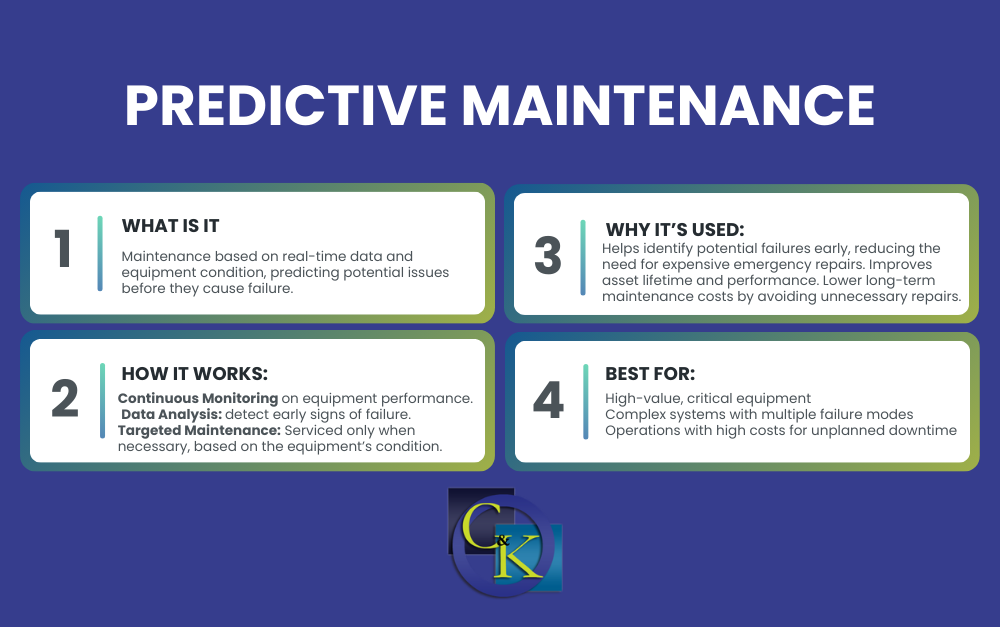
Predictive maintenance takes a different approach. It uses real-time data from sensors and monitoring tools to identify potential issues before they turn into equipment failure. Instead of following a calendar, you follow the data.
Both strategies represent a proactive approach to maintenance, and both beat waiting for something to break. But they differ in timing, technology, cost structure, and application. Choosing the right maintenance strategy depends on your equipment, your industry, and what’s at stake when something goes down.
Understanding these differences can help your maintenance team reduce unplanned downtime, control maintenance costs, and extend asset life. Here’s how each approach works and when to use them.
The Case for Staying on Schedule: How Preventive Maintenance Works
Preventive maintenance is the foundation of most industrial maintenance operations. The concept is straightforward: service equipment on a fixed schedule to prevent problems before they start.
Industrial equipment works the same way. Bearings need lubrication. Filters need replacement. Gaskets wear out. A solid preventive maintenance program addresses these realities regularly, whether or not there’s an obvious sign of trouble.
What Preventive Maintenance Looks Like
Preventive maintenance tasks typically include:
- Lubrication schedules
- Filter and fluid changes
- Regular inspections
- Calibration checks
- Belt and seal replacements
- Cleaning and debris removal
These activities are driven by manufacturer recommendations, historical data from similar equipment, and industry standards. The goal is simple: keep equipment in optimal condition and avoid unexpected breakdowns.
The Power of Predictability
The strength of this approach is predictability. Your maintenance team knows what’s coming, can plan labor and parts accordingly, and can schedule maintenance during planned outages rather than scrambling during a crisis. For many facilities, routine maintenance and regular checks form the backbone of reliable operations.
Reading the Signs: How Predictive Maintenance Works
Where preventive maintenance follows a schedule, predictive maintenance follows the equipment itself. It’s condition-based, meaning service happens when the data says it’s needed, not when the calendar does.
Listening to Your Equipment
Predictive maintenance leverages sensors and monitoring technology to track equipment health in real time. Vibration analysis, thermal imaging, oil analysis, ultrasonic testing, and pressure monitoring can all feed into a predictive maintenance strategy.
These tools collect real-time data on how equipment is actually performing, and predictive analytics identify patterns that signal developing problems.
A Practical Example
A gearbox in a steel mill might be scheduled for inspection every six months under a preventive approach. But with vibration and possibly temperature sensors in place, your team can get real-time insights into bearing condition, gear wear, and potential alignment issues.
If the data shows an anomaly at month three, you investigate. If everything looks clean at month six, you might extend the interval. The equipment tells you what it needs.
The Role of AI and Machine Learning
Predictive maintenance solutions often incorporate machine learning and artificial intelligence to analyze large data sets and spot trends that human review might miss.
Over time, these systems get smarter, learning what normal looks like for your specific equipment and flagging deviations that warrant attention. The result is a proactive maintenance strategy built on evidence rather than assumptions.
Side by Side: Key Differences That Matter
Both preventive and predictive maintenance aim to prevent failure, but they get there differently. Understanding where they diverge helps you decide which approach fits your operation.
Timing and Triggers
This is the biggest difference. Preventive maintenance is time-based or usage-based. You service equipment at regular intervals regardless of current condition.
Predictive maintenance is condition-based. You service equipment when monitoring data indicates a potential issue is developing. One follows the clock; the other follows the machine.
Technology Requirements
A preventive maintenance program can run on checklists, calendars, and basic record-keeping.
A predictive maintenance program requires sensors, data collection infrastructure, and analytics platforms to interpret the information. Advanced technology like vibration analyzers, thermal cameras, and oil sampling equipment becomes part of daily operations.
Cost Structure
Preventive maintenance delivers consistent, predictable maintenance costs. You know roughly what you’ll spend each quarter. The tradeoff is that you may perform a service that wasn’t strictly necessary.
Predictive maintenance typically requires higher upfront investment in technology and training, but it can deliver significant cost savings over time by eliminating unnecessary work and catching problems earlier. You’re also less likely to replace parts that still have useful life remaining.
Risk Management
From a risk perspective, both approaches reduce risk compared to waiting for failure. However, predictive methods can catch potential equipment failures that scheduled inspections might miss, especially issues that develop between service intervals.
When Waiting Isn’t an Option: The Problem with Reactive Maintenance
Before going further, it’s worth addressing the third approach: reactive maintenance. Also called run-to-failure or corrective maintenance, this strategy means fixing equipment only after it breaks.
When It Makes Sense
There’s a time and place for reactive maintenance. For low-cost, non-critical equipment where failure doesn’t impact operations or safety, it can make economic sense. Why invest in preventing the failure of a $50 component that’s easy to swap?
When It Doesn’t
For critical assets, reactive maintenance is a gamble with bad odds.
Unplanned downtime is expensive. Emergency repairs cost more than planned work, often significantly more when you factor in expedited parts, overtime labor, and production losses. Repair costs escalate when a single component failure damages connected systems.
The Safety Factor
In high-stakes environments like power generation, chemical processing, or oil and gas, an unexpected breakdown can create dangerous conditions.Consider a motor-operated valve in a steam system running at 1,800 PSI. If that valve fails to close when commanded, the consequences extend far beyond a maintenance headache. Reactive maintenance might work for your break room coffee maker. It’s not a strategy for the equipment that keeps your plant safe and operational.
Finding the Right Fit: How to Choose Your Approach
Most facilities don’t choose between preventive and predictive maintenance; they use both. The question is where each approach makes the most sense.
When Preventive Maintenance Works Best
Preventive maintenance is well-suited for:
- Equipment with predictable wear patterns
- Assets where manufacturer-recommended service intervals are well established
- Lower-cost equipment where sensor investment isn’t justified
- Compliance-driven inspections where regulations dictate specific schedules
If the failure mode is well understood and the service interval is proven, a preventive maintenance strategy delivers reliable results.
When Predictive Maintenance Adds Value
Predictive maintenance shines in these situations:
- High-value, critical equipment where failure carries significant financial or safety consequences
- Complex systems with multiple potential failure modes
- Operations are already collecting equipment data through control systems or historians
- Environments where unplanned downtime costs tens of thousands of dollars per hour
A Practical Path Forward
Start with a strong preventive maintenance program as your foundation, then layer in predictive methods for your most critical assets.
Use historical data from your preventive program to identify which equipment causes the most trouble, then target those assets for condition monitoring. Over time, you build a hybrid approach that balances cost, complexity, and risk.
Why the Right Partner Makes the Difference
Whether you’re tightening up your preventive maintenance tasks or building out a predictive maintenance program, execution matters as much as strategy. That’s where having the right partner comes in.
Decades of Experience
C&K (Chalmers & Kubeck) has supported industrial maintenance operations since 1950. Across power generation, chemical processing, oil and gas, steel manufacturing, and other demanding sectors, we’ve helped facilities minimize downtime and maximize reliability.
Our technicians don’t just follow checklists; they understand what they’re looking at and what it means for your operation.
Catching Problems Before They Become Failures
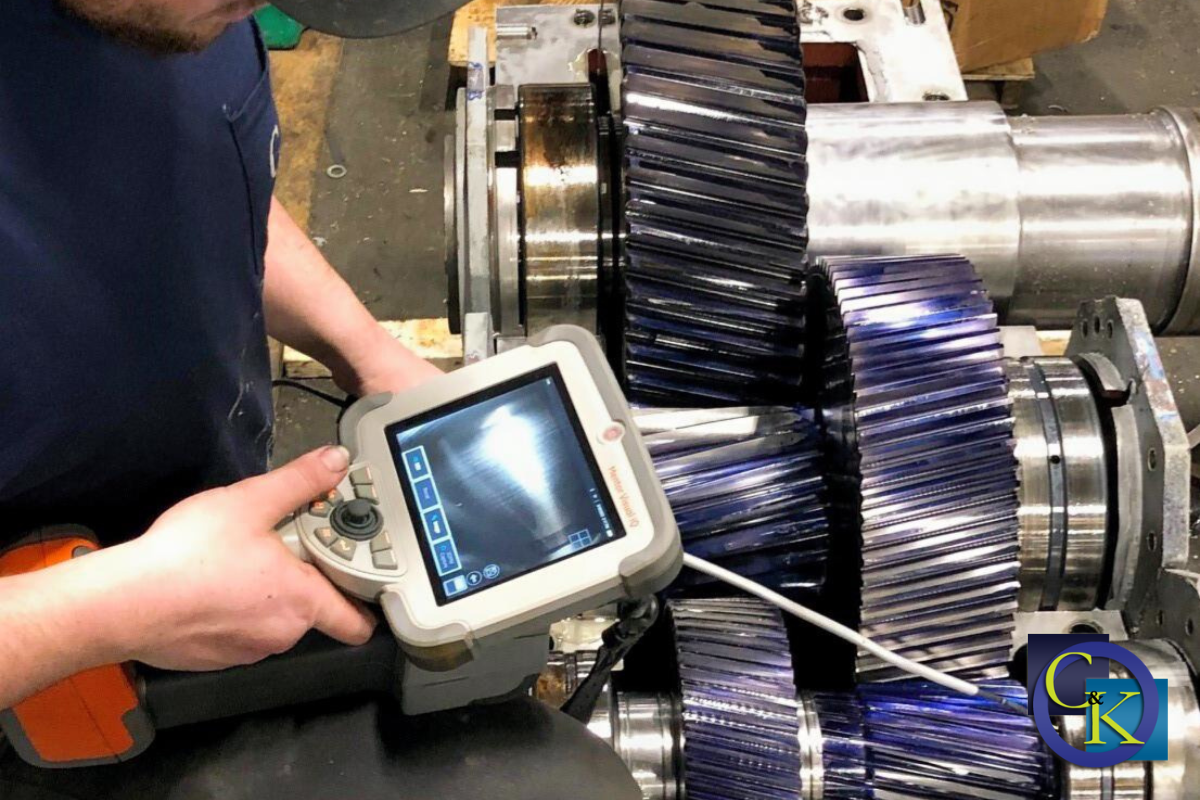
Take borescope inspections as an example. During a recent outage at a steel mill, a C&K technician was asked to take a closer look at a gearbox that had shown a curious vibration signature.
What he found, debris denting on bearing races and a damaged roller, would have led to catastrophic failure if left unaddressed. The customer’s maintenance team was able to swap the bearing before startup, avoiding an unplanned shutdown that could have lasted weeks.
Full Lifecycle Support
That’s the difference between going through the motions and genuinely protecting your equipment. Regular inspections, failure analysis, condition assessment, precision machining, and full lifecycle support for turbines, pumps, valves, actuators, and gear systems, C&K offers the technical depth to help your team make informed decisions and keep critical assets running.
Moving Forward with Confidence
The best maintenance strategy uses each approach where it makes sense, balancing cost, complexity, and consequence. And when the stakes are high, having a partner who understands industrial equipment at a deep level can make all the difference.If you’re evaluating your current approach or looking for support on critical maintenance activities, C&K is here to help. Contact us to discuss your needs, schedule an inspection, or learn how our services can support your proactive maintenance strategy.